
Bringing The Changing Ocean to Rio
Aurora Vortex at the BBNJ Symposium 2026
In March 2026, Aurora Vortex brought a pop-up VR edition of The Changing Ocean to the BBNJ Symposium in Rio de Janeiro, hosted at Museu do Amanhã. For three intensive days, delegates, researchers, policymakers, and ocean leaders were invited into an immersive underwater journey — from the restored waters of Bergen’s city fjord to deep-sea coral reefs, black smokers, and encounters with whales in the open ocean.
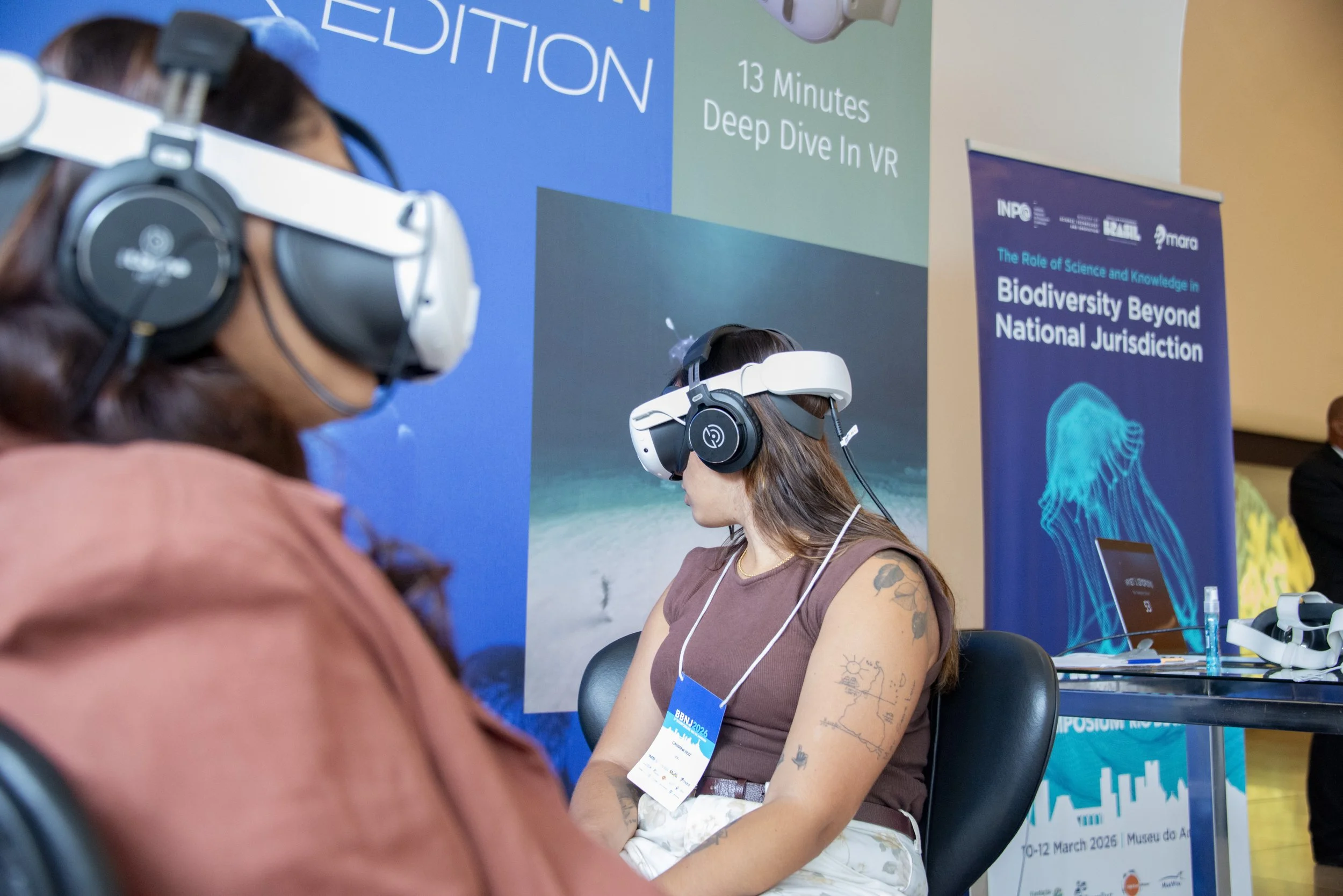
This was not a large-scale installation, but a compact and highly focused format: a VR headset-based version of the immersive experience.
From Bergen to Brazil
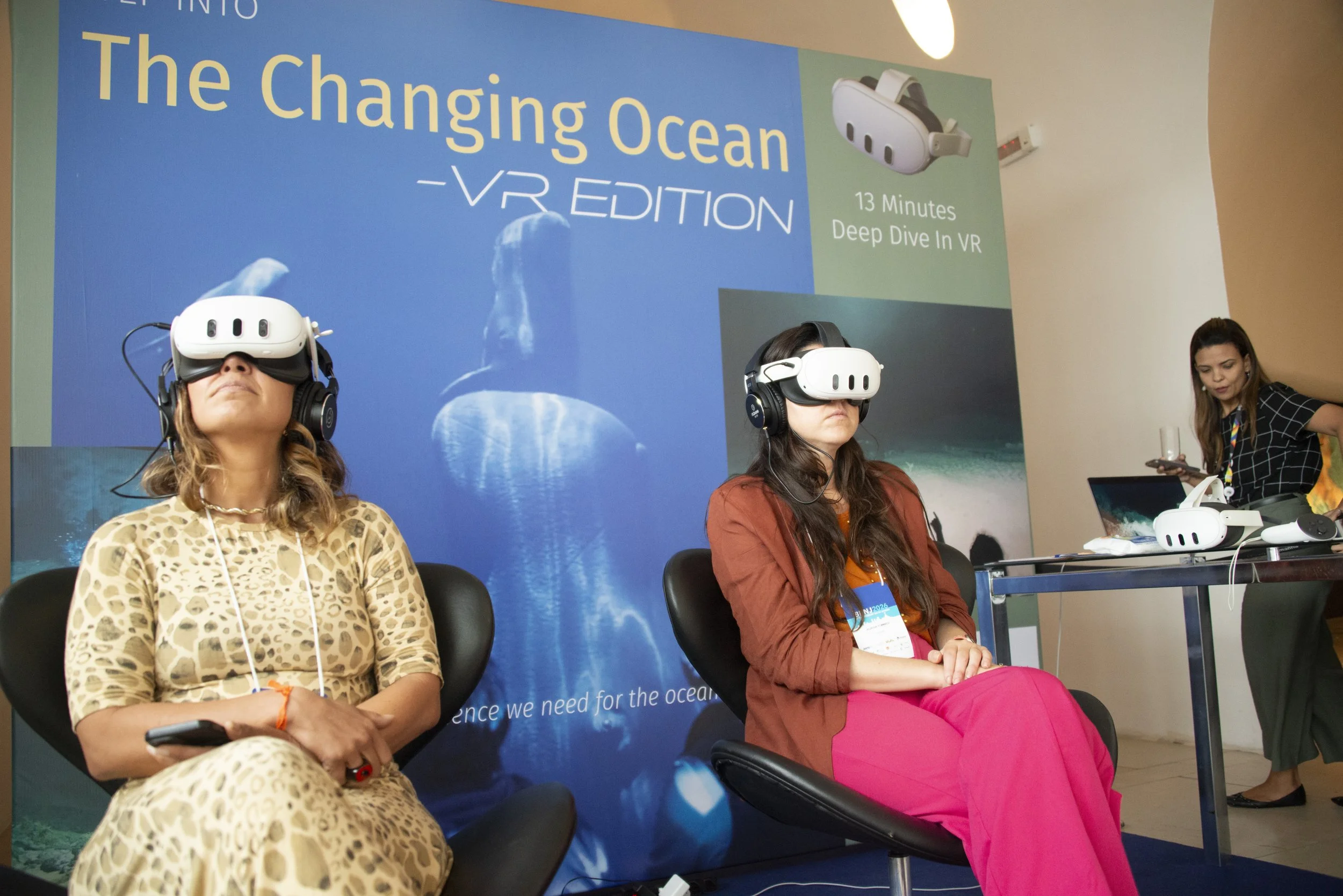
Originally created as a permanent immersive installation for Bergen Aquarium in collaboration with researchers from the Institute of Marine Research and the University of Bergen, the project was presented in Rio as a compact pop-up format using Meta Quest VR headsets.
As our first project presented abroad, bringing the work to Rio required careful planning. Transport, booth design, technical reliability, local coordination, language, and visitor flow all had to come together in a busy symposium setting.
Support from the Norwegian Embassy
A key part of making the presentation in Rio possible was the support from the Norwegian Embassy in Brazil. Their backing created the framework that allowed Aurora Vortex to bring the project to the symposium and present it in a highly relevant international context.
Building the booth in Rio
The booth itself came together through valuable collaboration. Ingrid Kuhn, who lives partly in Norway and partly in Rio, played an important role in coordinating practical solutions and local production. Karinne Assunção Matarim was an outstanding assistant at the booth, helping visitors through the experience, managing the flow, and interpreting when needed. Her contribution helped make the presentation welcoming, smooth, and accessible.
The VR experience also worked well in a busy symposium context. (Photo: INPO communication)
A different kind of ocean communication
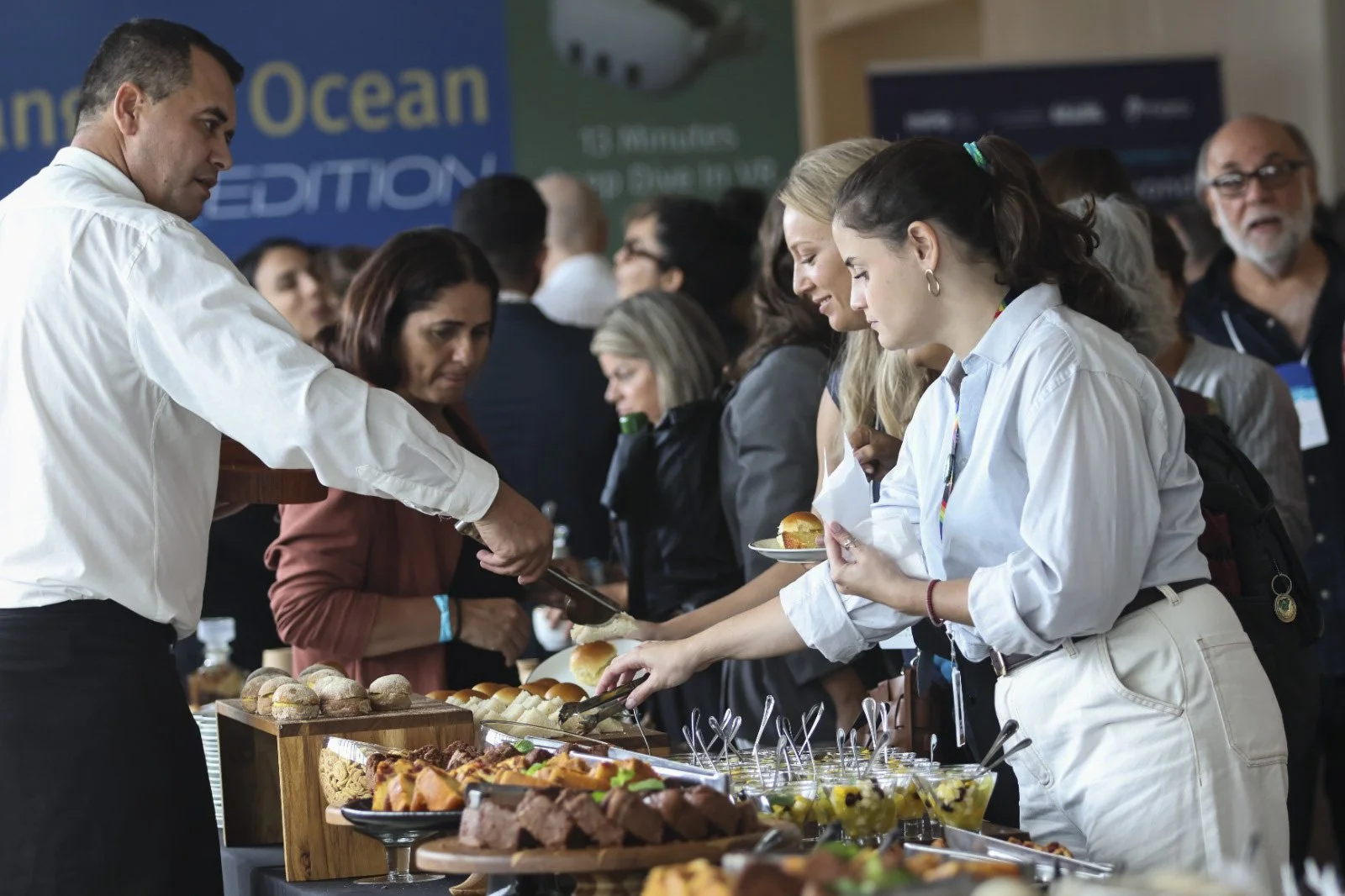
Even in a busy conference environment, the response was strong. Many visitors came out of the headset eager to talk further about the deep sea, the soundscape, and the emotional impact of the journey.
Several reactions stood out:
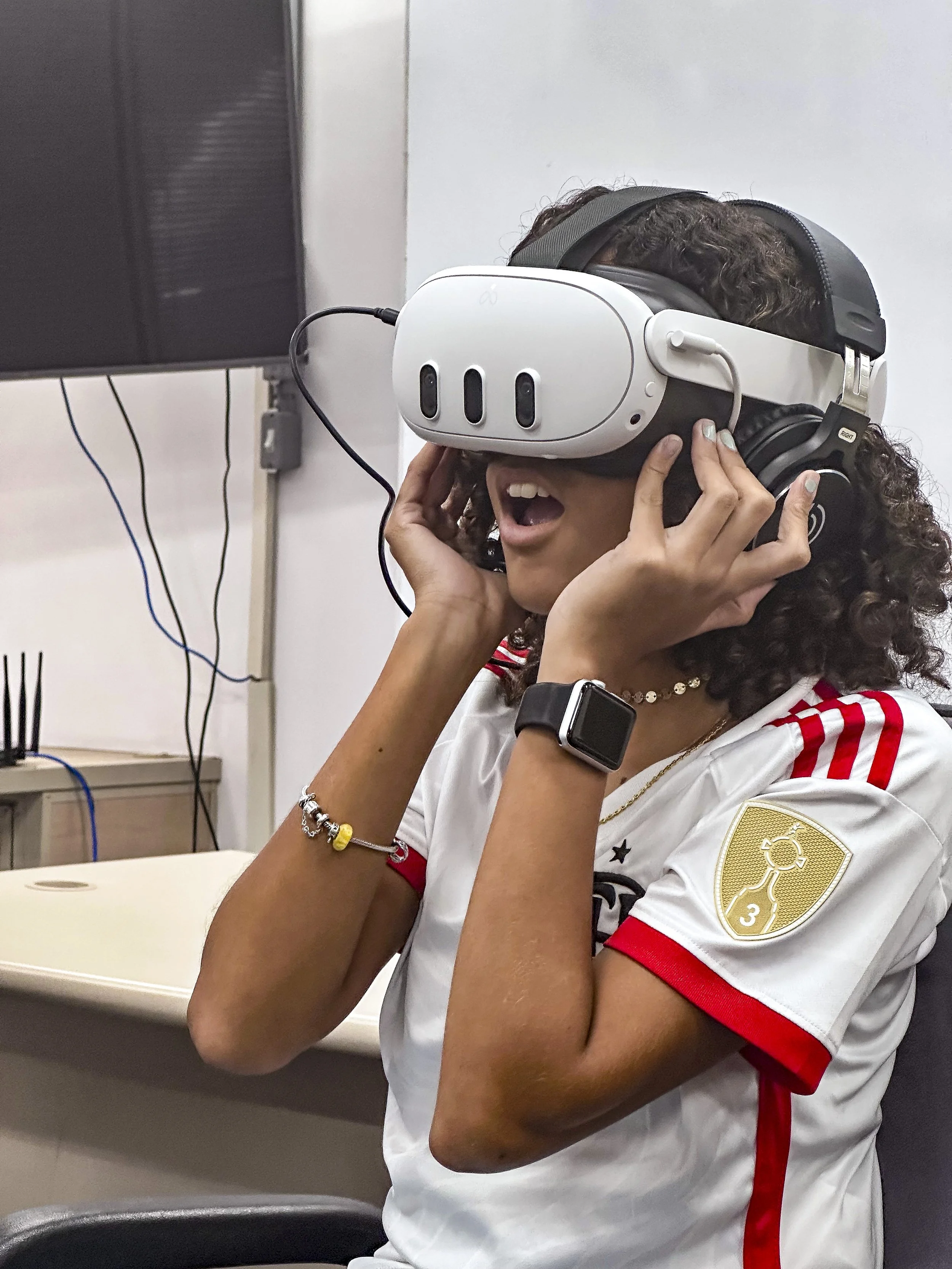
General audience responses included:
“Fantastic.”
“Amazing.”
“Sensational.”
“Real and important.”
“Very, very cool — you learn a lot.”
“It was like I could feel the pressure of the water when diving down.”
Some of the professional feedback included:
“Amazing work, fantastic.” — marine biologist and professor
“A fantastic and important experience.” — government representative
“Wow — an amazing experience.” — professor in marine studies
These kinds of responses confirmed something Aurora Vortex continues to believe deeply: when knowledge is transformed into lived experience, people connect differently. They do not just receive information. They feel it.
More than a booth
The VR experience opened conversations with researchers, delegates, faculty representatives, and international ocean stakeholders. It led to new interest, new invitations, and further dialogue about how The Changing Ocean could be presented in new contexts and formats.
After the symposium, the project was also invited to be presented at the Universidade do Estado do Rio de Janeiro (UERJ), where faculty and students responded with great enthusiasm. That continuation made it clear that the symposium was not an isolated event, but part of a growing international journey for the project.
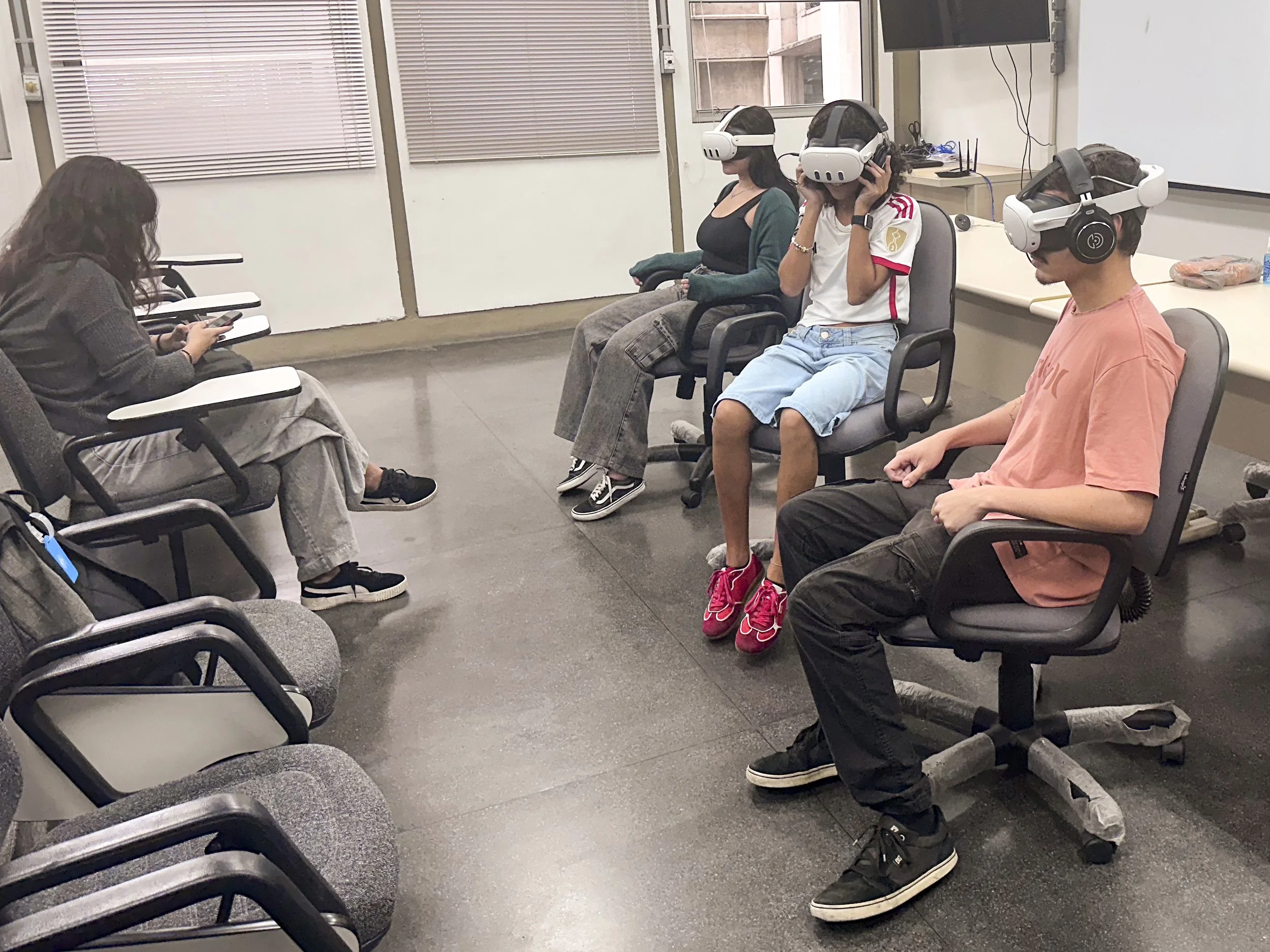
Students at Universidade do Estado do Rio de Janeiro (UERJ).
Why this matters
For Aurora Vortex, the BBNJ Symposium became an important step in showing how the VR experience also worked well in a busy symposium context and create meaningful engagement with ocean knowledge. It confirmed something central to our work: when science is translated into lived experience, it can reach people in a deeper and more lasting way.
The symposium also showed that there is real space for this kind of work in international ocean contexts — not as decoration, and not as spectacle, but as a meaningful form of research communication and public engagement.
And perhaps most importantly, it showed that people are ready for new ways of encountering the ocean.
Interested in bringing The Changing Ocean to your event or conference? Learn more about the pop-up format here:
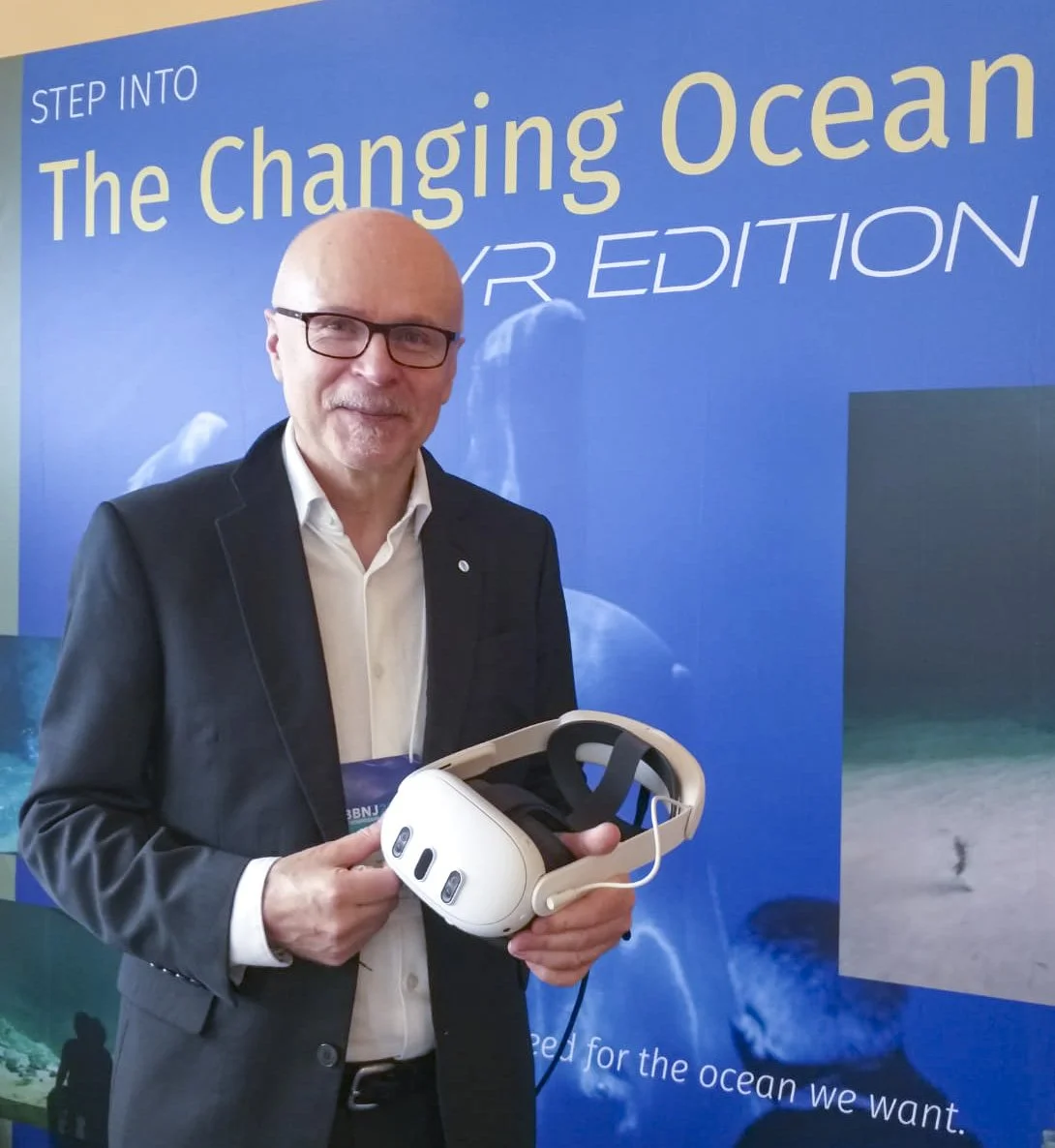
Sølve Jozeph Westli, Creative Director at Aurora Vortex.