
A weekend in the Lake District – what 120 VR journeys told us about ocean literacy
The Changing Ocean at Windermere Science Festival, May 2026
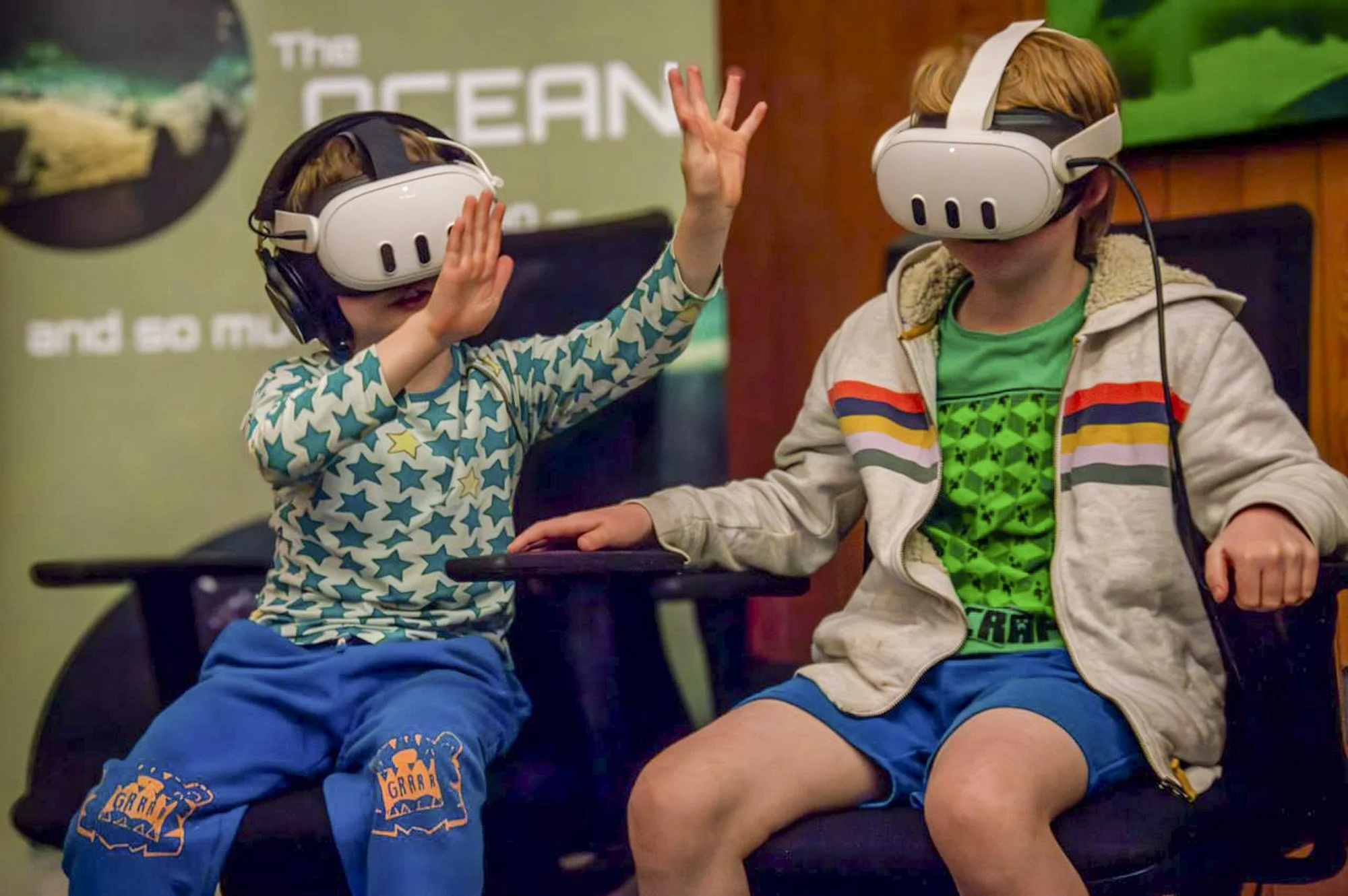
Photo: Jessica Wade
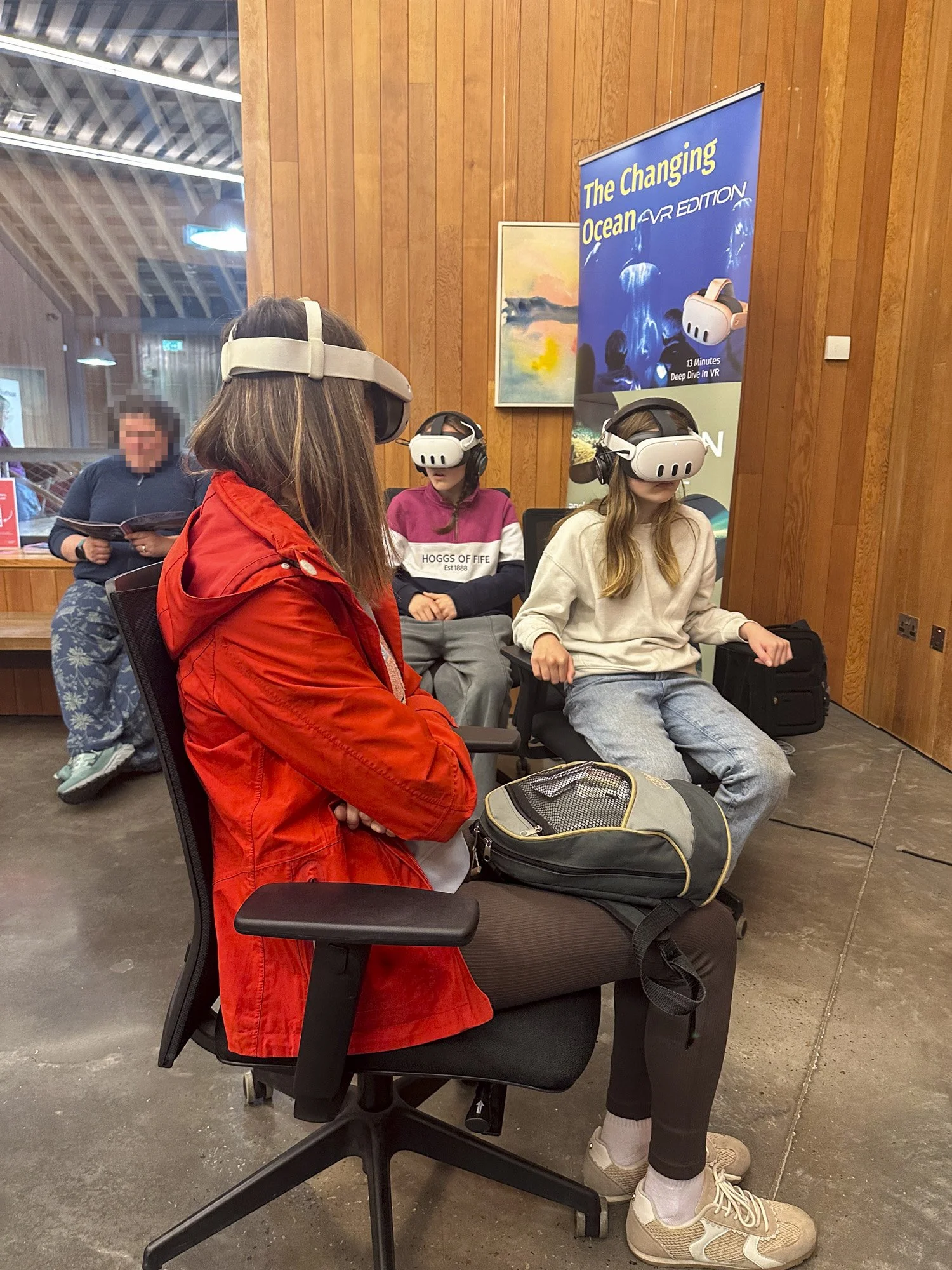
In May 2026, Aurora Vortex brought the VR pop-up edition of The Changing Ocean to the Windermere Science Festival in Cumbria, England. Over the weekend, more than 1,000 visitors came through the festival. 120 of them stepped into the headset.
It was the first time the work had been presented to a fully public audience abroad — families, school groups, and curious visitors from across the Lake District region. After the BBNJ Symposium in Rio earlier in the spring, where the audience was made up of researchers, policymakers, and ocean professionals, Windermere offered something quite different: a chance to see how the same 13-minute journey would land with people who had not come to a science conference, but to a weekend festival.
The festival organisers reported that the booth was the most popular activity of the weekend. That was good to hear. But what mattered more was what the visitors themselves said.

People were queuing from opening to closing on both days of the festival.
What the visitors said
Of those who responded to the visitor survey:
83% said the experience changed how they think about the ocean
17% said it might have
0% said it had not
One visitor wrote:
"That we as humans have the power to have a positive impact and be conscious of our decisions for the future of the planet. We can recognise previous mistakes and the power is there to change them — if the ocean floor of Bergen can be fixed on such a scale, so can other aspects."
A different audience, a similar response
Two months earlier, at the BBNJ Symposium in Rio de Janeiro, the same VR format had been experienced by close to half of the international delegation working on the High Seas Treaty. The responses there came from researchers, faculty, and policymakers — and the language was different, but the underlying signal was the same. People came out of the headset wanting to talk about what they had just felt.
(More about the Rio presentation here: Bringing The Changing Ocean to Rio.)
Most ocean communication is built either for experts or for the public, rarely for both. Windermere mattered because it began to show that the same compact format — designed first for a busy international symposium — can also do its work in a public festival tent. Different room, different audience, comparable response.
What the format actually is
The VR pop-up edition is a compact deployment of The Changing Ocean — the larger immersive installation that runs as a permanent exhibit at Bergen Aquarium and is recognised as an official Ocean Decade Activity under IOC/UNESCO. It is a 13-minute guided journey through the ocean, built from underwater footage and original ocean soundscapes, developed in collaboration with researchers from the Institute of Marine Research and the University of Bergen.
Why this kind of evidence matters
Ocean literacy is often described as a chain: empathy, understanding, care, action. The Changing Ocean is built around the conviction that this chain begins with experience. What we don't see or experience, we don't care about.
The Windermere survey is a small dataset, and we are careful with what we read into it. But it points the same way as the Rio responses, and the same way as ten years of audience reactions at the Bergen installation: when people are given the chance to feel the ocean — its sound, its scale, its life — something shifts.
That shift is the beginning of ocean literacy, not the end of it. The role of an experience like this is to open the door. What comes after — the reading, the conversation, the decisions, the action — is everyone's work.
Interested in bringing The Changing Ocean to your event?
The VR pop-up edition continues to travel, and a larger touring edition is in development. Learn more about the pop-up format here: www.auroravortexstudio.com/popup
The Changing Ocean is an official Ocean Decade Activity under IOC/UNESCO. The work was developed in collaboration with the Institute of Marine Research, the University of Bergen, and Bergen Aquarium.